The Australian dream of home ownership has changed. Here’s what the numbers tell us.
If you’ve ever heard your parents or grandparents say, “We bought our first house on one income,” you’ve probably wondered how they managed it.
Was buying a home really easier back then? Or does it just feel that way when you’re looking at today’s property prices?
The truth is that the Australian housing market has changed significantly over the past six decades. While previous generations faced their own financial challenges, the relationship between house prices and earnings has shifted considerably, making the path to home ownership more difficult for many Australians today.
For first home buyers, the deposit can take longer to save, borrowing capacity can be tighter, and the property you initially imagined buying might look a little different.
But here’s the important part… there isn’t just one way to approach buying a home.
Understanding your borrowing capacity, exploring different property types and suburbs, and getting a plan together can help turn “one day” into a more informed first step.
Let’s look at what the numbers tell us.
Buying a home in the 1960s vs today: What has changed?
One of the clearest ways to understand housing affordability is to compare house prices with annual earnings. After all, a house price means very little without understanding how much people earned at the time.
A historical analysis of Sydney detached house prices and average annual individual earnings provides an interesting comparison.
Sydney house prices compared with annual earnings
Sydney house prices compared with annual earnings*
| Measure | 1960 | 2024 |
|---|---|---|
| Estimated median Sydney house price | $8,500 | $1,647,395 |
| Average annual earnings used in the analysis | $1,893 | $80,600 |
| House price as a multiple of annual earnings | 4.5 times | 20.4 times |
The figures tell a striking story.
In 1960, the estimated median Sydney house price was approximately 4.5 times average annual individual earnings. By 2024, it had risen to around 20.4 times annual earnings.
Put simply, the price of a Sydney house has grown much faster than the earnings measure used in this comparison.
It’s important to note that this is a Sydney-specific comparison of detached houses, not a national average. It also doesn’t account for differences in mortgage interest rates, household incomes, tax, living expenses or the size and quality of homes over time.
Nevertheless, it illustrates why saving for a deposit and entering the property market can feel like a very different challenge for today’s buyers.
So, was buying a house in the 1960s really easier?
In terms of house prices relative to individual earnings, the historical data suggests Sydney buyers generally faced a lower barrier to entry.
However, it wouldn’t be accurate to say every Australian could easily afford a home in the 1960s.
Access to finance, employment opportunities, household structures, lending practices and social expectations were different. Some households faced significant barriers to ownership, and the experience of buying a home varied depending on location, income and personal circumstances.
Interest rates also matter. A lower purchase price doesn’t automatically mean a cheaper mortgage over its lifetime, just as a higher interest rate doesn’t tell the whole story about affordability.
The distinction is that today’s buyers are often confronting much higher property prices relative to earnings, which can make accumulating a deposit particularly challenging.
Home ownership rates have also changed
Australia’s overall home ownership rate has remained relatively high historically, but the picture is different for younger generations.
According to Australian parliamentary research, home ownership was around 70% in the mid-1960s. The 2021 Census recorded a national home ownership rate of approximately 67%.
The generational gap is more noticeable among younger adults. Parliamentary research comparing 1971 and 2021 found that:
- Home ownership among people aged 25–29 fell from 50% to 36%.
- Home ownership among people aged 30–34 fell from 64% to 50%.
These figures show why the first-home journey deserves a closer look. While the overall rate of home ownership has not collapsed, younger Australians are taking a different path into the market, and fewer are homeowners at the same ages as previous generations. (Source: Parliament of Australia, research on home ownership and affordability; Australian Census data).
Why saving a home deposit can feel harder today
For many first home buyers, the biggest challenge isn’t simply deciding which property to buy. It’s getting into a financial position to buy in the first place.
1. Property prices have outpaced wage growth
The National Housing Supply and Affordability Council reported in August 2026 that Australian dwelling prices had grown significantly faster than wages since December 2015.
Its analysis found that, between December 2015 and June 2025, the national Home Value Index increased by 63%, while the Wage Price Index increased by 27%.
That gap matters because when property values rise faster than wages, saving a deposit can become more difficult, even for people who are steadily increasing their income.
2. Saving a deposit takes planning
A deposit is often one of the biggest financial hurdles for a first home buyer.
Rent, groceries, transport, childcare, existing debts and everyday living expenses can all compete with savings goals.
And while a 20% deposit is a common benchmark, it isn’t the only possible pathway into home ownership.
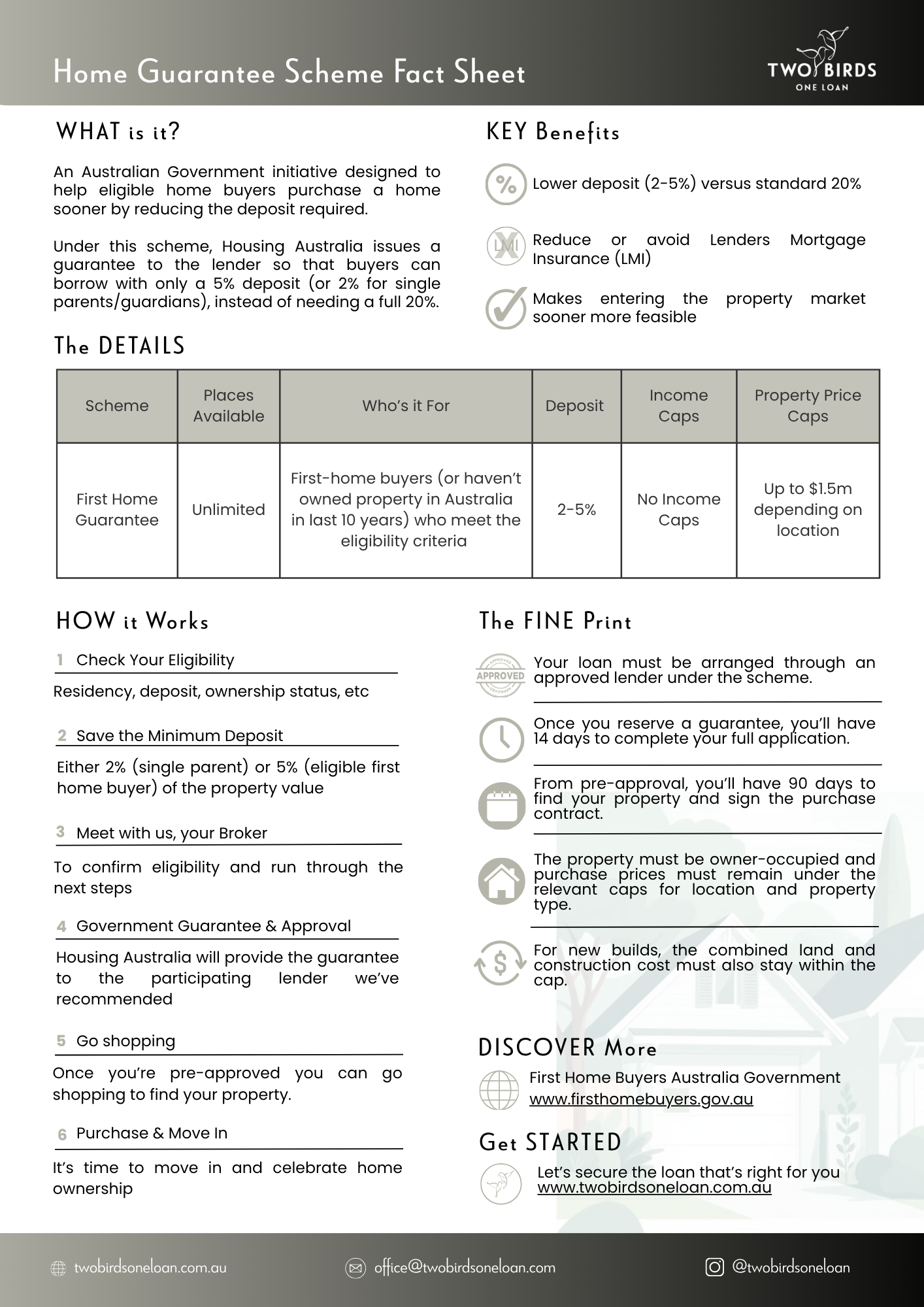
Depending on eligibility and the lender, some buyers may be able to purchase with a smaller deposit through eligible government schemes or other lending options. These arrangements have specific conditions, so it’s important to understand the full costs and implications before deciding which approach suits you.
3. Borrowing capacity is about more than your salary
It can be tempting to assume that earning a certain amount automatically means you can borrow enough to buy a particular property.
In reality, lenders assess a range of factors, including:
- Your income and employment circumstances.
- Your living expenses and existing debts.
- Your credit history and financial commitments.
- The deposit you have available.
- The proposed loan repayments and the lender’s serviceability requirements.
Two people earning the same salary may have different borrowing capacities because their financial circumstances differ.
That’s why understanding your numbers before you start house hunting can save time, reduce uncertainty and help you focus on properties that are more realistic for your circumstances.
Does your first home have to be your forever home?
Short answer: no.
One of the biggest pressures facing first home buyers is the idea that their first purchase needs to tick every box.
The perfect suburb. The perfect floor plan. Enough bedrooms for a future family. A big backyard. Room to renovate. And ideally, a kitchen that looks like something from Pinterest.
But buying your first home doesn’t have to mean buying your dream home all at once.
For some buyers, an apartment or townhouse may be a more achievable starting point than a detached house. Others may explore suburbs further from the city, consider a different property size or take additional time to build their deposit.
The right approach depends on your goals, budget, lifestyle and financial position.
A first home can be a stepping stone rather than the final destination.
That doesn’t mean rushing into a purchase or compromising on the things that matter most. It means understanding your options and deciding which trade-offs, if any, make sense for you.
Five practical steps to help you get closer to buying a home
You don’t need to have everything figured out before you begin. You do, however, need a starting point.
1. Understand your borrowing capacity
Before spending weekends at open homes, find out how much you may be able to borrow.
A borrowing capacity assessment can help you understand your potential budget, the repayments involved and the factors that may affect your application.
Remember that borrowing your maximum amount isn’t necessarily the same as borrowing an amount you’re comfortable repaying.
2. Work out your upfront costs
Your deposit is only part of the equation.
Depending on your circumstances and where you’re buying, you may also need to budget for stamp duty or transfer duty, conveyancing, inspections, loan-related costs and moving expenses.
First home buyer concessions or grants may be available, subject to eligibility and the relevant state or territory rules.
Understanding the total upfront cost can help you set a more realistic savings target.
3. Explore different property types and suburbs
If the numbers don’t work for your preferred suburb, it may be worth broadening your search.
Consider whether an apartment, townhouse, smaller property or different location could meet your needs.
Compare not only the purchase price but also ongoing costs, commute times, strata fees where applicable and the lifestyle you’re looking for.
4. Review your existing finances
Your current financial commitments can influence how much a lender is prepared to offer.
Review your spending, outstanding debts, credit limits and savings habits. Where appropriate, reducing debts or adjusting financial commitments may improve your position.
There is no one-size-fits-all formula, so consider your wider financial needs before making changes. Get started by accessing our Budget & Savings Tracker here.
5. Get a plan together before you start scrolling listings at midnight
A little preparation can make the buying process feel much more manageable.
Knowing your likely budget, deposit position, upfront costs and next steps can help you move forward with more confidence when the right property comes along.
You may not be ready to buy tomorrow, and that’s okay. Understanding what needs to happen between now and then is progress in itself.
How a mortgage broker can help first home buyers
Navigating home loans, lender policies, government schemes and upfront costs can feel overwhelming, particularly if you’re buying for the first time.
A mortgage broker can help you understand your borrowing options, compare suitable loan products across their lender panel and guide you through the application process.
At Two Birds One Loan, we believe good results are personal. We take the time to understand your circumstances, explain the options in plain English and help you work towards a home loan strategy that fits your goals. You can read more about the options available for First Home Buyers here.
Whether you’re ready to buy soon or still working out where to begin, getting a clearer picture of your financial position can be a valuable first step.
The Australian dream is changing, but your next step still matters
Buying a home today isn’t the same experience it was for many Australians in the 1960s.
House prices have grown significantly relative to individual earnings, younger generations are buying homes later, and saving a deposit can require a more deliberate plan.
But the path to home ownership isn’t identical for everyone.
Your first home might be an apartment rather than a house. It might be in a different suburb than you first imagined. Or you might need another year to build your savings and get your finances in order.
None of those things means you’ve failed.
You don’t need to have it all figured out. You just need to start.
We’re here to help you understand where you stand, what options may be available and what your next step could look like.
Ready to start your home-buying journey?
Whether you’re saving your first deposit, exploring your borrowing capacity or wondering whether buying a home is realistic for you, let’s talk.
Book a Meeting with Elle & Alissa. We’ll help you understand your options and take the next step towards your home ownership goals.
General information only. Lending eligibility, loan approval and government assistance depend on individual circumstances and applicable criteria. Consider your financial position and seek appropriate advice before making financial decisions.
*Source: Wealth & Security Planners, Australian Housing Affordability: A Century of Change, December 2024.
Figures are historical estimates in nominal Australian dollars, not inflation-adjusted. The earnings measure is individual average weekly earnings annualised, not total household income.*